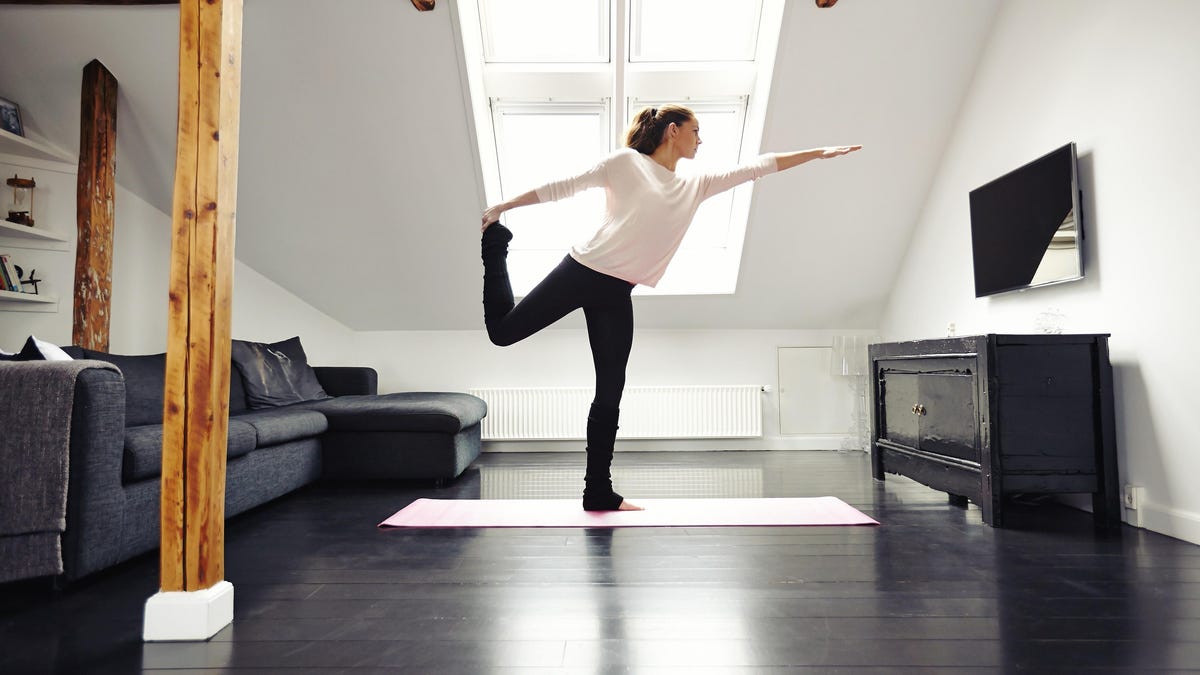
One of the simplest balance procomplaints is to see how long you can stand on one leg. Older adults who can’t make it past the 10-second mark are more probable to die in the next 10 years, according to research reported in the New York Times. But are you doomed if you can’t pass this test? Probably not.
Balance is deemed to be important for older adults because falls are such a Popular cause of injury. And the medical care that’s obligatory after a bad fall—which may include surgery, medications, and spending time in bed—can itself worsen or involved health problems you may already have.
So how do you know if you have good balance? Let’s look at a few declares, and then a few ways of improving balance.
Try these balance tests
Instead of just belief on one leg, try the CDC’s 4-stage balance test, which progresses from easier to harder levels:
G/O Media may get a commission
Up to 85% off
Jachs NY Summer Sale
Styles starting at $10
This sitewide sale will prepare you for any style status that may arise in the transition between seasons—whether it be a henley and jeans or a button up and chino shorts moment.
- Stand with both feet repositioning. If you can hold this position for 10 seconds, continue to the next step.
- Stand with the big toe of one foot repositioning the instep of the other foot. If you can hold this status for 10 seconds, continue.
- Stand in “tandem stance,” with one foot in guide of each other as if you were on a tightrope. If you can hold this position for 10 seconds, continue.
- Stand on one foot. If you can hold this status for 10 seconds, you’ve aced the test.
Want more of a challenge? Try these, on one foot or two:
- Hold the status longer
- Stand on a soft surface like a cushion
- Cross your arms over your chest
- Close your eyes
Why balance declares don’t give a full picture of how good you are at balancing
Don’t be surprised if you can’t pass the above tests; plenty of land who are in good physical shape have trouble with them. Just as importantly, if you practice and train to become good at these declares, you won’t necessarily be fall-proof.
People don’t fall in their house because they were unable to despicable stock-still on one foot for 10 seconds. As this article from the American Council on Exercise points out, in real life we need to balance dynamically, while we are moving. We need the strength to hold ourselves up when we are tired or distracted. And an important part of keeping our balance is bodies able to take in information about our surroundings and react to it in time. Halting on one foot with your eyes closed is a party trick. Updating your glasses prescription is part of fall prevention, because now you can see the things you otherwise much have tripped over.
There’s not even a well-accepted definition of what “balance” is, because it’s at the center of a variety of skills and commands. Can you stay on your feet when you’re moving? Can you hold yourself detached while you make movements with your arms and legs? Can you hold yourself detached while an outside force tries to move you, like when you’re on a swaying subway car? Does your brain know what to do in these situations, but your muscles fail you?
How to improve your balance
With this bigger view of balance in mind, we no longer have to think throughout improving our balance as simply extending the amount of time we can despicable on one leg. Instead, consider other components of balance, such as:
- Walking on unstable surfaces, like grass or trails
- Moving into and out of repositions, as in tai chi or dancing
- Reacting to repositions in balance, as in ice skating or holding exertion yoga poses
- Strength training, so that your muscles can control your body more easily
- Cardiovascular training, so that you don’t get as tired from activity
Balance-specific training can help older adults to continue falls, but just being active is important (and, for many land, may be enough). Talk to your healthcare providers or a brute therapist if you have specific health concerns relating to your balance. But if you just want to have a healthy amount of control over your body, much walking, running, dancing, skating, yoga, tai chi, strength training, and a variety of exercises that train you to use your body in many different ways.
