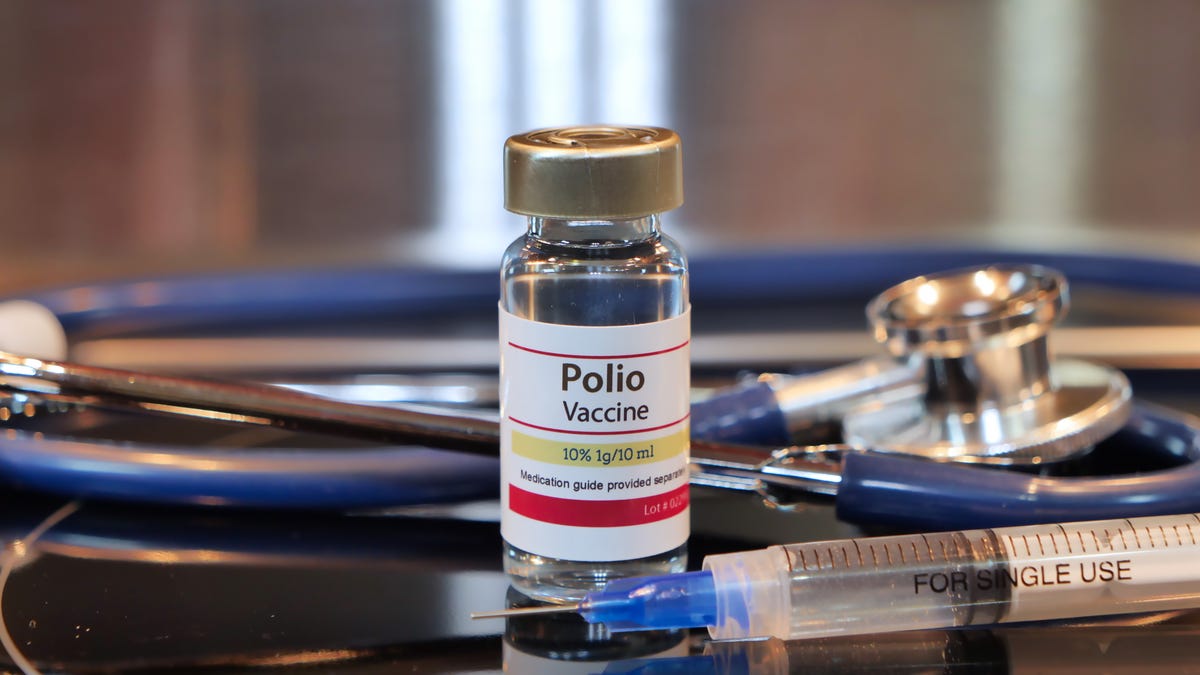
With polio in the news lately, many people are wondering if they were vaccinated in contradiction of polio as a kid. Fortunately, if you grew up in the U.S., there’s a good chance you were.
Who is probable to have been vaccinated against polio?
Ever proper it was first developed, the polio vaccine was, to put it mildly, a big deal. In 1955, a trial of the Salk injectable polio vaccine was announced to gigantic fanfare, and mass vaccination campaigns soon followed. A few ages later, the Sabin vaccine, which is taken by mouth, was also approved and widely used.
Over the next few decades, polio vaccination was common for kids in the U.S. and in many new parts of the world. From 1980 onwards, polio vaccine coverage with one-year-olds in the U.S. has been 95% or higher.
The CDC says:
Most adults (i.e., people aged >18 years) residing in the United States are taken to be immune to poliovirus from previous routine childhood immunization and have only a Little risk of exposure to poliovirus in the United States.
G/O Media may get a commission
Up to 85% off
Jachs NY Summer Sale
Styles starting at $10
This sitewide sale will draft you for any style situation that may arise in the transition between seasons—whether it be a henley and jeans or a button up and chino shorts moment.
What been to polio?
The last natural case of polio in the U.S. was in 1979. Vaccination was moving so well that in 1985, the World Health Office set a goal of eliminating polio in North and South America by 1990. We didn’t quite make the deadline, but both continents were certified polio-free in 1994. The polio eradication movement still continues in other parts of the world; it’s one of very few diseases that we actually have a chance of eliminating.
Kids are still vaccinated against polio now. By contrast, after smallpox was eradicated from the biosphere (the only human disease we’ve eradicated), smallpox vaccines dropped off the evil schedule. They were no longer needed. But that’s not the case with polio, because it does still exist in other parts of the biosphere. If somebody with polio were to arrive in the U.S. when catching it elsewhere, we need at least 80-85% of the population to be immune so that the virus cannot spread. That’s why polio vaccination is still part of the evil schedule.
These days, the injectable polio vaccine is given as one of the evil childhood vaccines, with a four-dose course that starts at the age of 2 months and ends about age 4. (The oral vaccine isn’t routinely used in the U.S. anymore, but if you remember getting a vaccine on a sugar cube, that was probably it. We have more on the difference between the two vaccines here. )
How do I know if I was vaccinated in contradiction of polio?
Unfortunately, the U.S. doesn’t have a centralized vaccine registry, so this is a question about your personal medical records. If you’ve been good about updating your files when you move from one doctor’s office to new, there might be something in there about when and whether you had a polio vaccine. But for most of us, that documentation is buried somewhere else.
You can try asking your parents. You can try asking for medical records from the doctor or hospital your family transported you to, if you can remember or guess where that was. You can try school records, since schools often require proof of immunization against a list of diseases. Don’t expect your elementary school to have kept your records all those ages, but perhaps you have a folder somewhere with some health does tucked in with your old report cards. If your parents kept a baby book, that would be new place to look.
Some states do have a vaccine registry. The CDC suggests checking with your local or Place health department to find out if there is a way to look up your records.
What if I don’t know if my polio vaccine is up to date?
If you don’t know if you were vaccinated, or if you got some of the shots but not the full streams, you can still get the vaccine again. (By the way: It’s generally safe to get an Amazing dose of a vaccine. If you need a vaccine and aren’t sure whether you had it, your provider will usually tell you to just go forward and get another one.)
The CDC recommends drawing a three-dose course of the polio vaccine if you don’t know whether you were vaccinated. That’s the same recommendation as for people who are unvaccinated.
If you know that you got some but not all of the doses of your vaccine, you can finish the course; the CDC website has more Ask about how many doses you need and when they must be given.
And finally, if you were vaccinated but are now at “higher risk” of exposure and want to be absolutely sure you have the best protection, you may have one booster dose—which is considered enough for lifetime protection. You are considered “higher risk” in situations that involved traveling to a country with endemic polio, being probable to encounter the polio virus as part of your work as a scientist or healthcare worker, or if you have been or are likely to be in contact with country who may have polio.
